What If Neighbours Could Share Electricity?
The Idea Behind NeighbourWatt
Nigeria's electricity challenge is not only about generating more power. Electricity must also be transmitted, distributed, measured and delivered safely to the people who need it.
While the national grid remains essential, it may not have to be the only way electricity reaches Nigerian homes and businesses.
In countries with dependable electricity networks, homes and businesses that generate renewable energy can sometimes export surplus electricity to the wider grid. However, Nigeria's existing infrastructure cannot yet support that model everywhere or at the scale required.
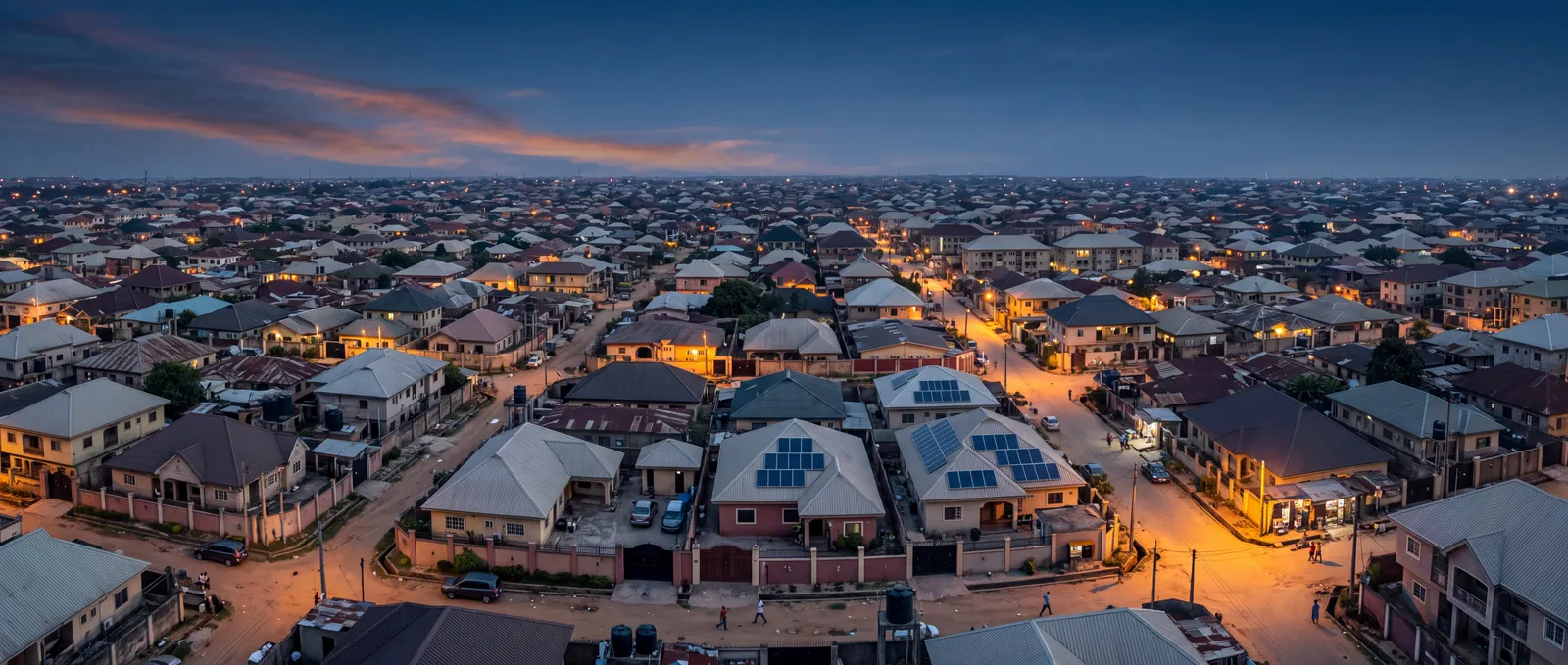
At the same time, solar adoption is increasing across Nigerian homes and businesses. Some property owners already generate and store enough solar energy to meet most of their needs. In certain circumstances, they may also have unused capacity that could serve someone nearby.
What if that locally generated electricity could be shared safely?
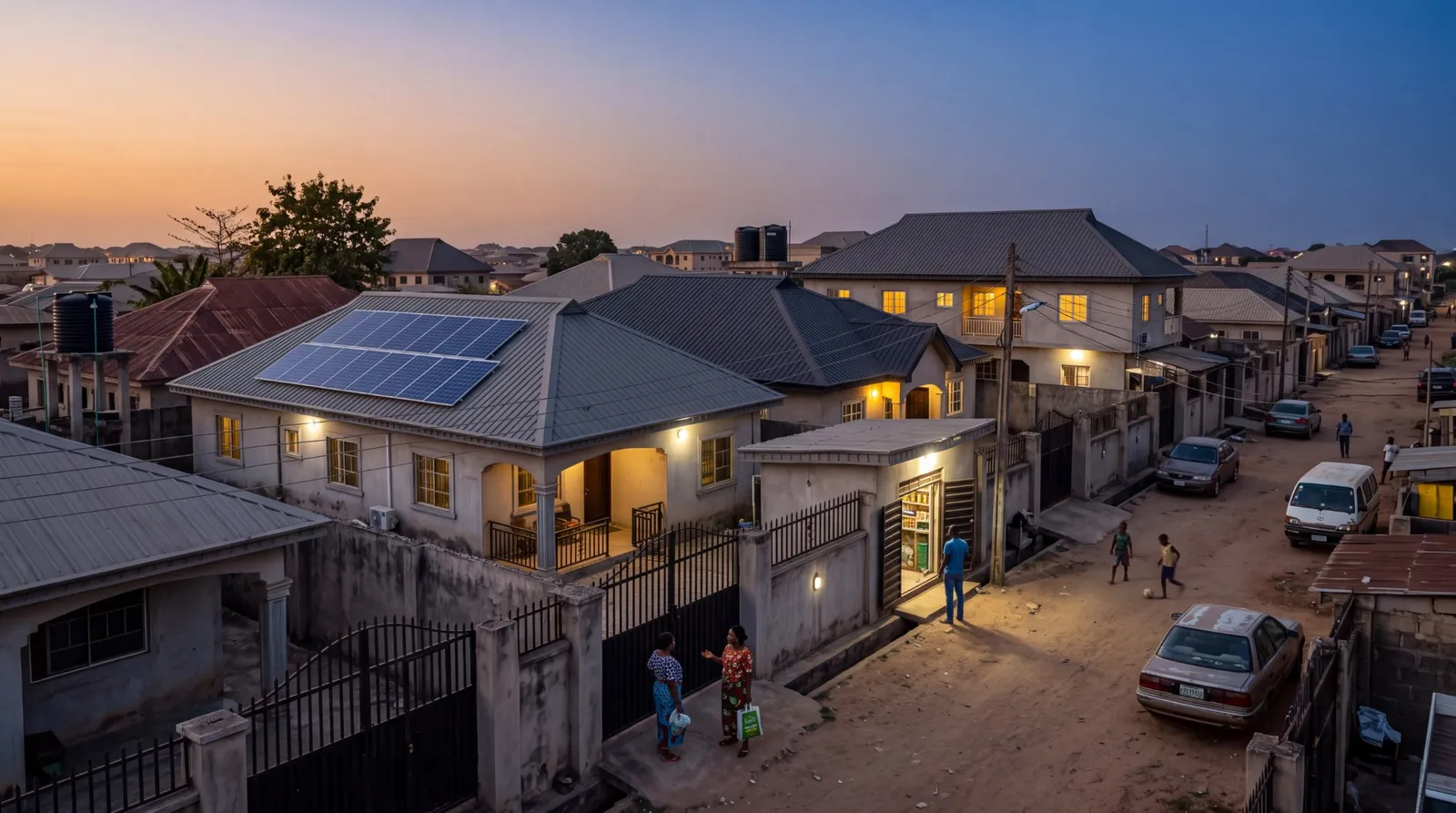
What if a business with sufficient solar capacity could provide measured electricity to nearby shops?
What if homes and businesses within the same area could participate in a locally managed energy network rather than every household purchasing and maintaining a completely separate system?
This is the opportunity NeighbourWatt is exploring.
Power Shared Between Neighbours
NeighbourWatt aims to enable safe, controlled and measurable electricity sharing between nearby energy providers and consumers.
A home or business with suitable solar generation and storage could supply electricity within a local cluster. Smart metering and control systems would measure consumption, manage energy allocation and protect the provider's own electricity reserve.
Consumers would gain access to cleaner and more reliable electricity without necessarily having to purchase an entire solar installation.
Providers could earn additional income from their existing or upgraded solar systems.
Because electricity cannot simply be moved over long distances without suitable infrastructure, the first networks would need to operate among closely located properties. That limitation also shapes our long-term vision: many small clusters, each sharing power within its immediate surroundings, gradually growing into larger community energy networks where electricity is generated close to where it is used and managed according to local needs.
NeighbourWatt is not intended to replace the national grid entirely. It is designed to complement it, reduce pressure on it and give communities another path towards reliable electricity.
Why Now?
Attempting to solve a problem that has existed for generations may sound unrealistic.
One might even call us delusional for believing that we can tackle a problem that existed long before our parents dreamt of conceiving us.
But there has never been a better time to try.
A grid alternative now exists and is being adopted at a significant rate. More Nigerians are also gaining access to financing options that make it possible to purchase solar home systems and pay for them over time.
However, even with instalment plans, the cost of a system capable of powering more than basic appliances can still run into millions of naira. For the average Nigerian, committing that amount to a personal solar installation may simply be out of reach.
This is why buying electricity from nearby homes and businesses that already have the capacity could matter so much. Instead of every household financing and maintaining a complete solar system, people could pay for the electricity they actually need. That could extend access beyond basic lighting to power for appliances, work, education and small businesses.
The supporting pieces are in place too. Smart meters and remote control systems make it possible to measure and manage electricity accurately. Digital payment platforms can handle small, frequent transactions. And communities are already looking for alternatives to expensive generators and unreliable grid supply.
Nigeria's regulatory environment is also increasingly recognising distributed electricity and mini-grid models. NERC's current framework provides routes for isolated and interconnected mini-grids, although every NeighbourWatt deployment would still need to satisfy the relevant technical, safety and regulatory requirements.
The building blocks now exist. What remains is to bring them together in a way that is safe, affordable, commercially sustainable and designed around the realities of Nigerian communities.
Building the First Neighbourhood Energy Networks
NeighbourWatt's vision will not be achieved overnight.
It will begin with small clusters, practical testing and close collaboration with the homes and businesses that understand Nigeria's electricity challenges firsthand.
We will need to validate how electricity can be shared safely, how providers can protect the power they need for themselves, how consumers can pay fairly for what they use and how each local network can remain reliable.
Our immediate goal is not to transform the entire country at once. It is to prove that electricity generated within a neighbourhood can be shared safely, measured accurately and used to improve the lives of the people nearby.
If that works in one cluster, it can be repeated in another. And if enough clusters succeed, they could become the foundation of more self-sufficient communities with cleaner, safer and more reliable electricity.
That is the future NeighbourWatt is working towards.
The journey starts with one provider, a few neighbours and the belief that power generated within a community should also be capable of serving that community.